
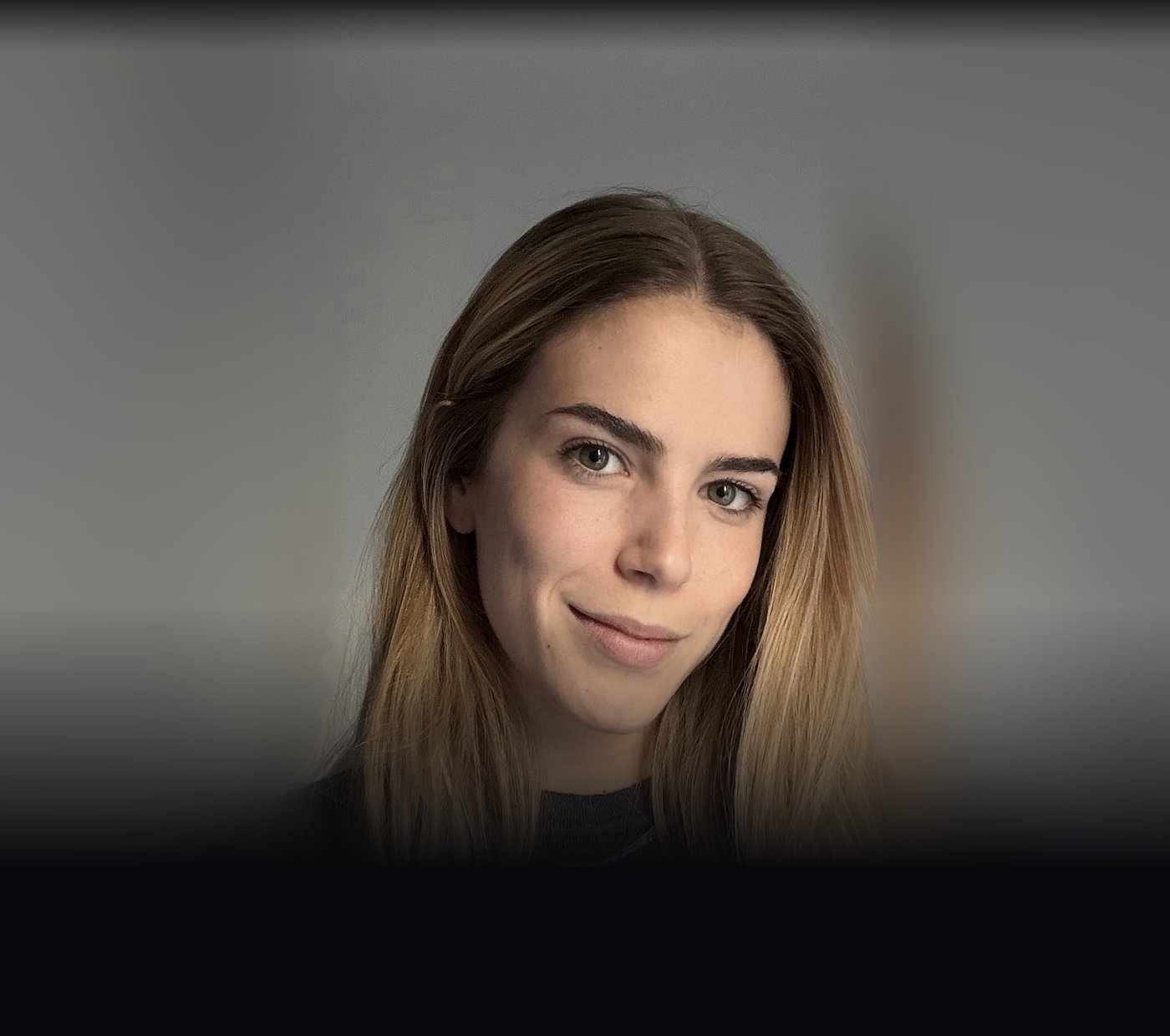
Senior Data Scientist

About

I came to data science through economics.

Clara Trujillo Santos-Olmo

Clara Trujillo Santos-Olmo
Senior Data Scientist · Madrid

Now
NTT DATA, since 2023
Before
EY, audit
Team
Coordinating three analysts
Languages
Spanish · English

Specifically, through econometric models. What hooked me was the idea that you could put a number on how one thing moves another and be wrong in a way you could actually measure. That instinct never left.

I went on to do a master's in Big Data, Data Science and AI at Universidad Complutense, which gave me the engineering half of the job.

What I have been chasing since is the overlap between the two: technology that changes a business decision, rather than technology for its own sake. That is why consulting suits me.

I joined NTT DATA in 2023 after starting out in audit at EY. Since then I have been promoted two grades, skipping the intermediate level, and I coordinate a team of three analysts. I work in Spanish day to day and in English for anything international.

The model is never the deliverable. Someone has to decide something because of it.

Toolkit

From the model to the committee room.

Modelling
Bayesian RidgeLinear regressionA/B testingExperimental designDemand forecastingGradient boostingRandom ForestClusteringRecommender systems
Building
PythonSQLDatabricksAzure Data LakeSparkETL · millions of records/dayGitClaude Code
Communicating
Power BITableauStreamlitCommittee decks
Studied

MSc Big Data, Data Science & BI

Universidad Complutense de Madrid

BSc Economics

Universidad de Castilla-La Mancha

Selected work

Highlighted projects.

From the commercial question to the decision it changed.

Project 01 / 03

The promotions were paying for themselves and nothing more

Spain's leading brewer — one of the country's top FMCG companies — ran discount coupons on its ordering platform for bars and restaurants. Sales and discounts moved together almost perfectly, so the programme looked like a success.

88%

correlation between sales and discounts

0

incremental return

The trap

Correlation isn't causation.

Customers who would have ordered anyway also use the coupon — and a discount can simply pull forward an order that was coming next week.

What I did

Bayesian Ridge over hundreds of thousands of orders.

Separating the first coupon order from the ones that followed, with different methods for percentage and fixed-amount coupons.

What came out

Net return: indistinguishable from zero.

The first coupon order brought extra volume; the following orders gave it all back through cannibalisation. The programme was rescheduling sales, not creating them.

Where it landed

An alternative plan, taken to the steering committee.

Five lifecycle segments with data-derived thresholds, a look-alike model to find offline customers worth acquiring, and an activation plan with its own success measure.

Correlation was 88%. Incremental return was zero.

Project 02 / 03

Knowing when a bar will reorder

The same platform needed to tell each outlet what to order and when. Standard forecasting struggles here: a small bar might order one product every three weeks, with long gaps that are not zeroes so much as silence.

20k+

outlets forecast daily

~80%

no-purchase calls correct

~1%

false negatives

The problem

Irregular buyers across 20,000+ outlets.

Daily demand for every distributor, outlet and product line — most of them buying irregularly.

What I did

Each outlet's rhythm, plus the world outside.

Recency, moving averages and the most comparable week a year earlier, combined with weather, public holidays and football fixtures weighted by how big the match was.

The hard part

Knowing when a gap really means no purchase.

Interpolation and a statistical rule, tuned against the error that costs money: telling an outlet it doesn't need stock when it does.

What came out

4 in 5 no-purchase calls correct.

False negatives near one percent, validated by replaying four months of real order history.

The interesting variable turned out to be the football calendar.

Project 03 / 03

Why insurance customers were unhappy

An insurer wanted to reduce detractors. The assumption inside the business was that people were dissatisfied because the medical coverage was too thin.

2 in 5

detractors unhappy with the process, not the cover

What I did

Two models and a friction score.

A predictive detractor model on authorisation data and a satisfaction model beside it, scoring friction by province and specialty across satisfaction, complaints, usage and operations.

What came out

It wasn't the coverage.

Among detractors who barely used their policy, roughly two in five were unhappy with the process — delays and authorisations — not with what was covered.

Where it landed

From widening coverage to fixing operations.

Prioritised by the friction score, and delivered as committee summaries, dashboards and plain-language explanations inside the file front-line agents actually use.

Half the job is the model. The other half is explaining it to the business.

I build models for commercial decisions — promotions, demand, retention — and I stay with them until someone can act on the answer.

Madrid · open to relocation within the EU

What I do

I work between the data team and the business.

Promotional return

Separating what a promotion actually caused from what would have happened anyway, and finding the point where spending more stops paying.

Demand forecasting

Predicting what each customer will order and when, including the hard case: the ones who buy rarely and irregularly.

Customer segmentation

Grouping customers by how they behave rather than who they are, then turning those groups into something a commercial team can act on.

Translating both ways

Turning a vague commercial question into something a model can answer, and a model's output into something a committee can act on.

Outside work

Beyond the data.

Training

Most days. The gym is where I do my clearest thinking, and fitness is a hobby in its own right.

Podcasts

Entrepreneurship, emotional intelligence, and how people actually work with each other.

Markets

Investing is a running curiosity rather than a second career — I like knowing what's going on in the world.

AI, for my own day

Taking the tedious parts out of my work — which is how Claude Code ended up in my workflow, not in a slide.

Piano

Formally trained as a pianist. The one thing I do that has nothing to do with any of the above.

Looking for work where measurement decides things.

Open to roles across the EU in commercial and marketing data science, demand forecasting, or anywhere the question is whether something actually worked.

claratrujillosantosolmo@gmail.com